

Key Takeaways
- “Ciao” is beloved but informal—use it only with friends, family, or peers your age in casual settings
- “Salve” is your secret weapon for situations where you’re unsure whether to be formal or casual
- Time of day matters: Italians switch greetings based on whether it’s morning, afternoon, or evening
- Regional variations exist—Southern Italians might greet you with “Uè!” while Northerners stick to standard phrases
- The wrong greeting won’t ruin your trip, but the right one opens doors (sometimes literally)
How to cite this article: McAlister, D. 2025. Lady In Italy. Hello in Italian: The Greetings That’ll Actually Make Italians Smile. www.ladyinitaly.com/article/hello-in-italian
I walked into a breakfast restaurant behind a line of Italians, each chatting quickly with the host. The sort of loud-but-warm Italian banter that comes from friendly strangers. When I passed the host, I said “Ciao!” Just the one word, softly, and he immediately changed to English. “He knows you are American” my friend said when we sat down at the table.
I’d outed myself with one word.
That moment taught me something no phrasebook ever did: knowing how to say hello in Italian isn’t just about memorizing words. It’s about reading the room, understanding relationships, and respecting a culture where greetings carry genuine weight.
Why Italian Greetings Matter More Than You Think
Here’s something that surprised me when I first started traveling to Italy: greetings aren’t just social pleasantries there. They’re a form of respect. Skip them, and you’ve essentially told someone they’re invisible.
Walk into any shop in Italy without acknowledging the owner? Rude. Pass a neighbor in your apartment building’s stairwell silently? Practically hostile. Italians greet everyone—the barista, the bus driver, the random person sharing their elevator. According to Italiano Bello, this practice stems from Italy’s historically tight-knit community structures, where acknowledging others reinforced social bonds and mutual respect.
This cultural context matters because it explains why Italians care how you greet them, not just whether you do.
The Greeting Everyone Gets Wrong: Ciao
Let’s start with the word you already know. “Ciao” is famous, versatile, and… frequently misused by tourists.
Yes, ciao means hello in Italian. It also means goodbye. It’s the Swiss Army knife of Italian greetings—but like any multi-tool, there’s a time and place.
When to use ciao:
- With friends and family
- With children (even strangers’ kids)
- Among young people in casual settings
- When someone uses it with you first
- In very relaxed environments like beach bars or youth hostels
When to skip it:
- Addressing anyone significantly older than you whom you don’t know
- In professional or business contexts
- With shopkeepers you’ve never met (unless they ciao you first)
- When entering formal establishments like upscale restaurants or hotels
The word itself has fascinating origins. According to Treccani, Italy’s authoritative linguistic reference, “ciao” derives from the Venetian dialect word “s’ciavo,” meaning “I am your slave”—a phrase of humble respect that evolved into today’s casual greeting. Ironic, given how informal it’s become.
Salve: Your Safety Net (And My Personal Favorite)
Here’s the greeting that saved my dignity after the Lucca incident: salve.
Italian salve occupies this beautiful middle ground between formal and casual. It’s derived from the Latin “salvere,” meaning “to be well” or “to be in good health.” When you don’t know whether to go formal or friendly? Salve.
I use it constantly. Walking into a shop? “Salve!” Asking for directions from a stranger? “Salve, scusi…” Greeting my building’s doorman whom I see daily but wouldn’t call a friend? “Salve!”
It’s appropriate in virtually any situation where you’re uncertain. The only contexts where it might sound strange are deeply intimate moments (greeting your Italian boyfriend with “salve” would be weird) or extremely formal occasions (a business presentation might call for something more elaborate).
Think of salve as the respectful nod of Italian greetings. It acknowledges someone without presuming intimacy.
Time-Based Greetings: What Italians Actually Say
Italians don’t just say hello in Italian—they say hello appropriate to the moment. Master these, and you’ll sound less like a tourist reading from a phrasebook.
| Greeting | Greeting Meaning | When to Use | Formality |
|---|---|---|---|
|
Buongiorno |
Good day/morning |
Morning until early afternoon (roughly until lunch) |
Formal/neutral |
|
Buon pomeriggio |
Good afternoon |
After lunch, before evening |
Formal (less common) |
|
Buonasera |
Good evening |
From late afternoon onward |
Formal/neutral |
|
Buonanotte |
Good night |
Only when parting for the night/going to bed |
Either |
The exact transition time from buongiorno to buonasera varies by region and personal preference. Some Italians switch at lunch, others around 5 or 6 PM. When in doubt, listen to what locals are saying and mirror them.
One thing that trips up English speakers: buonanotte isn’t a greeting. It’s only for saying goodbye at night, specifically when someone’s heading to bed. Walk into a restaurant at 9 PM and say “Buonanotte!” and you’ll get confused looks. You’ve essentially wished them a good night’s sleep before they’ve even served you.
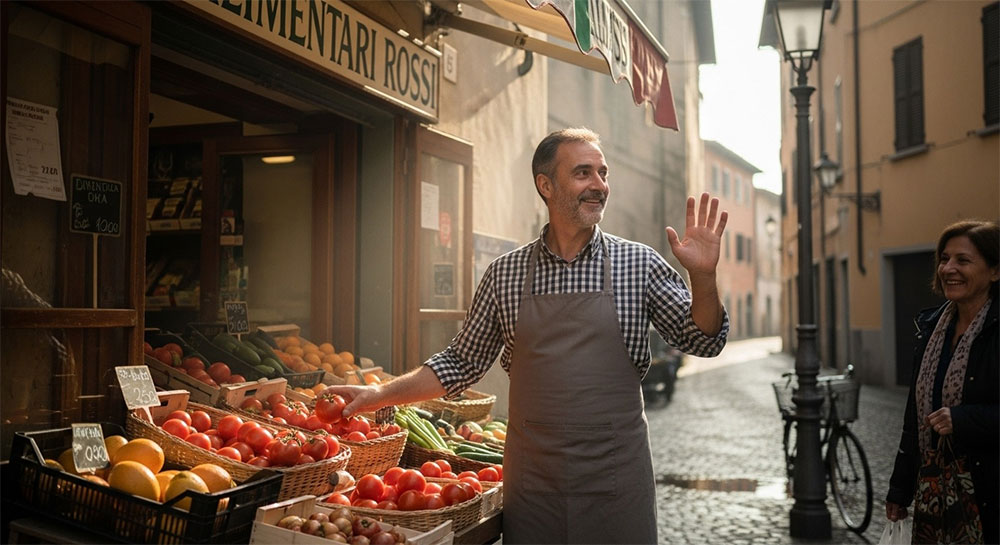
How Do You Say Hello in Italian? The Complete List
| Italian Greeting | English Equivalent | Formality Level | Regional Notes | Best Used When |
|---|---|---|---|---|
|
Ciao |
Hi/Bye |
Very informal |
Universal |
With friends, casual settings |
|
Ciao ciao |
Bye-bye |
Very informal |
Universal |
Friendly farewells |
|
Salve |
Hello |
Neutral |
Universal |
Uncertain situations |
|
Buongiorno |
Good morning/day |
Formal |
Universal |
Professional settings, strangers (AM) |
|
Buonasera |
Good evening |
Formal |
Universal |
Professional settings, strangers (PM) |
|
Uè / Wè |
Hey! |
Very informal |
Southern Italy, especially Naples |
Close friends only |
|
Ehilà |
Hey there |
Informal |
Northern Italy |
Surprising someone, casual |
|
Pronto |
Hello (phone only) |
Neutral |
Universal |
Answering phone calls exclusively |
|
Eccomi |
Here I am |
Informal |
Universal |
Arriving somewhere expected |
That “Pronto” entry deserves special attention. Italians never say “ciao” or “buongiorno” when answering the phone—they say “pronto,” which literally means “ready.” It’s one of those quirks that immediately marks you as a non-native speaker if you get it wrong.

Hello, How Are You? Taking It Further
Once you’ve got the initial greeting down, Italians often follow up. Here’s how to say hello how are you in Italian and actually respond:
“Come stai?” (informal) or “Come sta?” (formal) both mean “How are you?”
Standard responses:
- “Bene, grazie, e tu/Lei?” — Good, thanks, and you?
- “Tutto bene” — All’s well
- “Non c’è male” — Not bad
- “Così così” — So-so
Here’s insider knowledge: Italians actually mean it when they ask how you are. Unlike the American “How are you?” which expects “Good!” regardless of reality, Italians might genuinely share if something’s wrong. Don’t be surprised if your simple greeting turns into a five-minute conversation about someone’s aunt’s hip surgery.
If you’re exploring Rome or Venice and want to connect with locals, following your greeting with “Come sta?” shows you’re interested in more than transactional interaction.
Regional Flavors: Southern Charm Meets Northern Precision
Italy wasn’t unified until 1861, and regional differences in language persist. Greetings are no exception.
In Naples and much of Southern Italy, you might hear “Uè!” (pronounced like “way!”) shouted across the street between friends. It’s warm, boisterous, and very Neapolitan. Use it with locals only after they’ve used it with you—it’s intimate.
Sardinia has its own greeting tradition, with “Salude” serving as a common hello (reflecting Spanish and Latin influences on the island’s language).
Northern Italians tend toward more reserved greetings, sticking to standard buongiorno and buonasera even in casual settings. The stereotype of cold Northerners isn’t entirely fair, but they do tend toward formality more than their Southern compatriots.
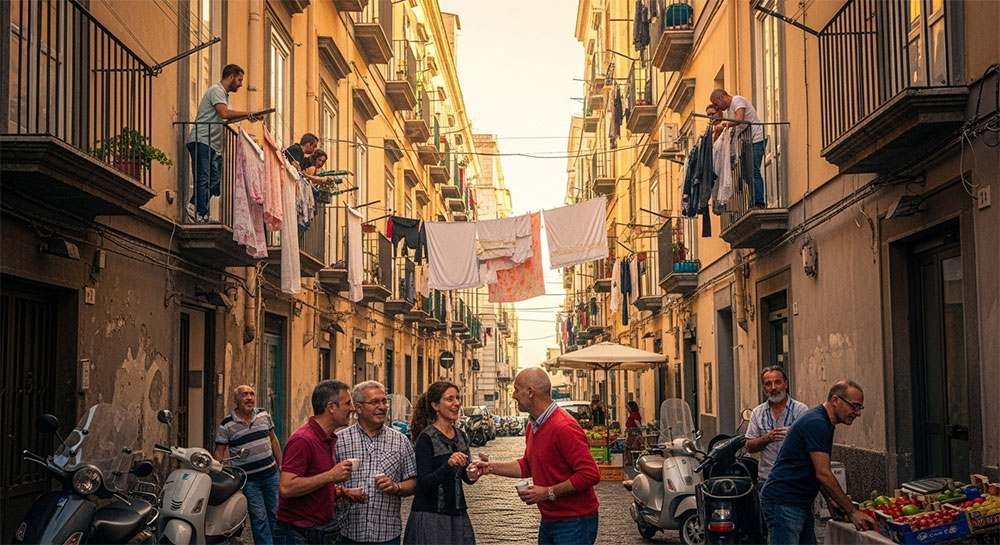
Hello Friend in Italian: Greetings for People You Know
Once you’ve established a relationship, Italian greetings become warmer and more elaborate.
“Ciao, bella/bello!” — Hey, beautiful! (Used casually between friends, not just romantic interests)
“Ciao, cara/caro!” — Hey, dear!
“Eccoti!” — There you are! (When someone arrives)
“Che piacere vederti!” — What a pleasure to see you!
“Finalmente!” — Finally! (When someone arrives after being awaited)
Italians are physically demonstrative greeters. Expect cheek kisses (two, starting with the left cheek), embraces, and enthusiastic back-patting among friends. If you’re more reserved, a warm handshake is always acceptable, especially for first meetings.
The Physical Stuff: Kissing, Handshakes, and Personal Space
Speaking of physical greetings—let’s address the cheek-kiss situation.
Yes, Italians kiss cheeks when greeting friends and acquaintances. The standard is two kisses, starting with the left cheek. But here’s what nobody tells you: you’re not actually kissing their cheek. You’re pressing cheeks together while making a kissing sound near their ear. Actual lip-to-cheek contact is reserved for family and very close friends.
For first meetings with strangers, a handshake is standard. Make it firm but not bone-crushing. Maintain eye contact. Say your greeting as you shake.
Italians stand closer during conversation than Americans typically do. Don’t back away—it signals coldness. This might feel uncomfortable initially, but you’ll adjust.

Practicing Without Embarrassment
Here’s my honest advice: you will mess up Italian greetings. I still occasionally get the formality wrong after years of visiting. Italians are generally forgiving of genuine attempts, even imperfect ones.
Practice options that actually work:
Talk to yourself. Seriously. Walk around your house greeting imaginary Italians. “Buongiorno, signora!” to the houseplant. “Ciao, bello!” to the cat. It sounds ridiculous, but muscle memory matters.
Watch Italian films without subtitles. Pay attention to how characters greet each other and what context surrounds their choices. Netflix has a surprising amount of Italian content.
Visit Italian restaurants and shops. If you’re lucky enough to have an Italian community nearby, practice there. Most Italian-American restaurant owners appreciate the effort.
Use language apps deliberately. Apps like Duolingo or Babbel cover greetings, but they don’t always teach context. Use them for pronunciation practice, then supplement with real-world application.
And when you’re finally on the ground in Italy, whether exploring food markets or wandering walking paths? Use every greeting opportunity. The espresso bar. The gelato shop. The museum ticket counter. Each interaction is practice.
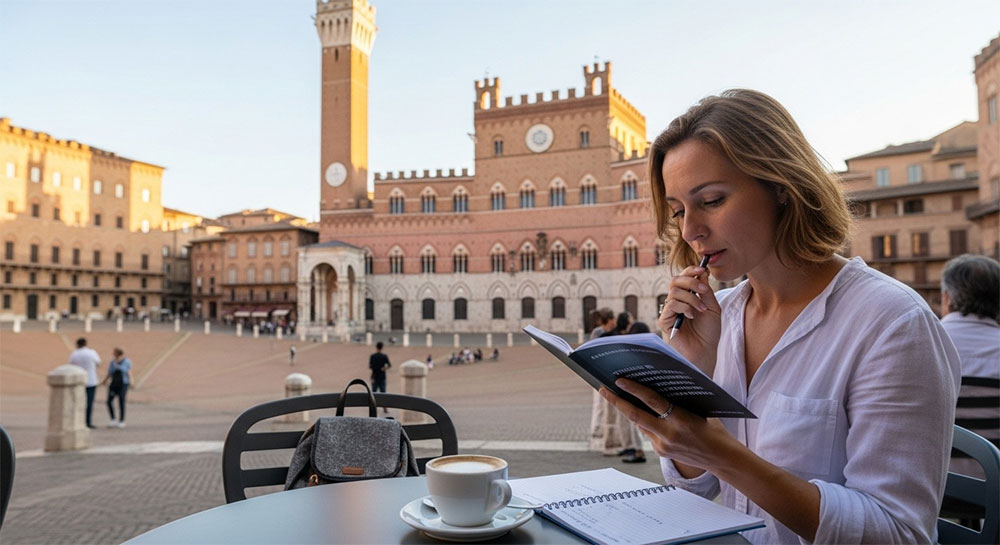
Quick Reference: Difficult Concepts Explained
| Concept | What Confuses Learners | The Simple Truth |
|---|---|---|
|
Formal vs. Informal “you” |
When to use “tu” vs. “Lei” |
Use “Lei” (formal) with strangers, elders, professionals. Use “tu” with friends, children, peers who’ve indicated informality. |
|
“Buongiorno” timing |
When exactly does morning end? |
Regional and personal. Safe bet: switch to “buonasera” around 5-6 PM or whenever you notice locals doing so. |
|
“Ciao” as hello AND goodbye |
How can one word mean both? |
Think of it as “see ya!” in English—works coming and going in casual contexts. |
|
Gender in greetings |
When does gender matter? |
“Signore” (Sir), “Signora” (Madam), “Signorina” (Miss). When adding “bello/bella” or “caro/cara,” match to the person’s gender. |
|
The non-response greeting |
Why do Italians sometimes just nod? |
Brief acknowledgment greetings (like passing someone in a hallway twice) are normal—full verbal exchanges every time would be exhausting. |
Common Mistakes to Avoid
Saying “Buon giorno” as two words. It’s one word: buongiorno. Same with buonasera and buonanotte.
Using “Arrivederci” casually. This formal goodbye sounds stiff with friends. Stick to “ciao” or “ci vediamo” (see you) in casual settings.
Forgetting to greet entirely. Walking into a shop and immediately asking for something without saying hello first is considered rude in Italy. Always greet, then request.
Over-pronouncing everything. Italian greetings flow quickly. “Buongiorno” becomes almost “bwon-JOHR-noh” in fast speech, not a carefully enunciated five-syllable production.
Assuming everyone wants a cheek kiss. Read body language. If someone extends their hand, shake it. Don’t lean in for kisses with strangers.
Your Greeting Will Open Doors
The right greeting won’t just save you from awkward moments. It transforms you from tourist to guest—someone worthy of conversation, recommendations, maybe even friendship.
So learn these greetings. Practice them. Use them liberally. Because in Italy, hello isn’t just hello.
It’s an invitation.
Frequently Asked Questions (FAQs)
What is the most formal way to say hello in Italian for business settings?
In formal business contexts, “Buongiorno” (morning/early afternoon) or “Buonasera” (late afternoon/evening) followed by the person’s title and surname is appropriate. For example: “Buongiorno, Dottor Rossi” or “Buonasera, Signora Bianchi.” Avoid “ciao” entirely in professional first meetings.
How do you pronounce common Italian greetings correctly?
Buongiorno: bwon-JHOR-noh (stress on second syllable). Buonasera: bwon-ah-SEH-rah. Ciao: CHOW (rhymes with “now”). Salve: SAHL-veh. The key is keeping vowels pure—Italian doesn’t have the “schwa” sound common in English.
What are the regional differences in Italian greetings between Northern and Southern Italy?
Southern Italy, particularly Naples and Sicily, features more animated greetings like “Uè!” and greater physical affection. Northern regions like Lombardy and Piedmont tend toward more reserved greetings with stricter formal/informal divisions. Venice has its own dialect greetings, and Sardinia uses “Salude” reflecting its unique linguistic heritage.
Is it rude to say ciao to strangers in Italy?
It can be perceived as overly familiar, particularly with older Italians or in professional contexts. A 2019 survey by ISTAT (Italian National Institute of Statistics) on social behaviors found that 67% of Italians over 50 prefer formal greetings from strangers. When unsure, “salve” or “buongiorno/buonasera” are safer choices.
How do Italian greetings change throughout the day?
Italians use “buongiorno” from waking until around lunch or early afternoon, then transition to “buonasera” for the rest of the day until bedtime. “Buonanotte” is exclusively for parting when someone is going to sleep, not a general evening greeting. The exact transition time varies by region and personal preference.
What's the difference between arrivederci and arrivederLa in Italian farewells?
“Arrivederci” is the standard formal goodbye, appropriate for most professional and polite situations. “ArrivederLa” is even more formal, using the courtesy “Lei” form, and is typically reserved for very formal contexts or when addressing someone of notably higher status. In casual settings, Italians simply say “ciao” for goodbye.
Ready to put these greetings into practice? Start planning your Italian adventure with our travel essentials guide and don’t forget sun protection for those long days exploring piazzas!